Reverse Shoulder Replacement in Whitefield, Bangalore
Reverse Shoulder Replacement (Reverse Shoulder Arthroplasty) Care by Dr. Harsha G N
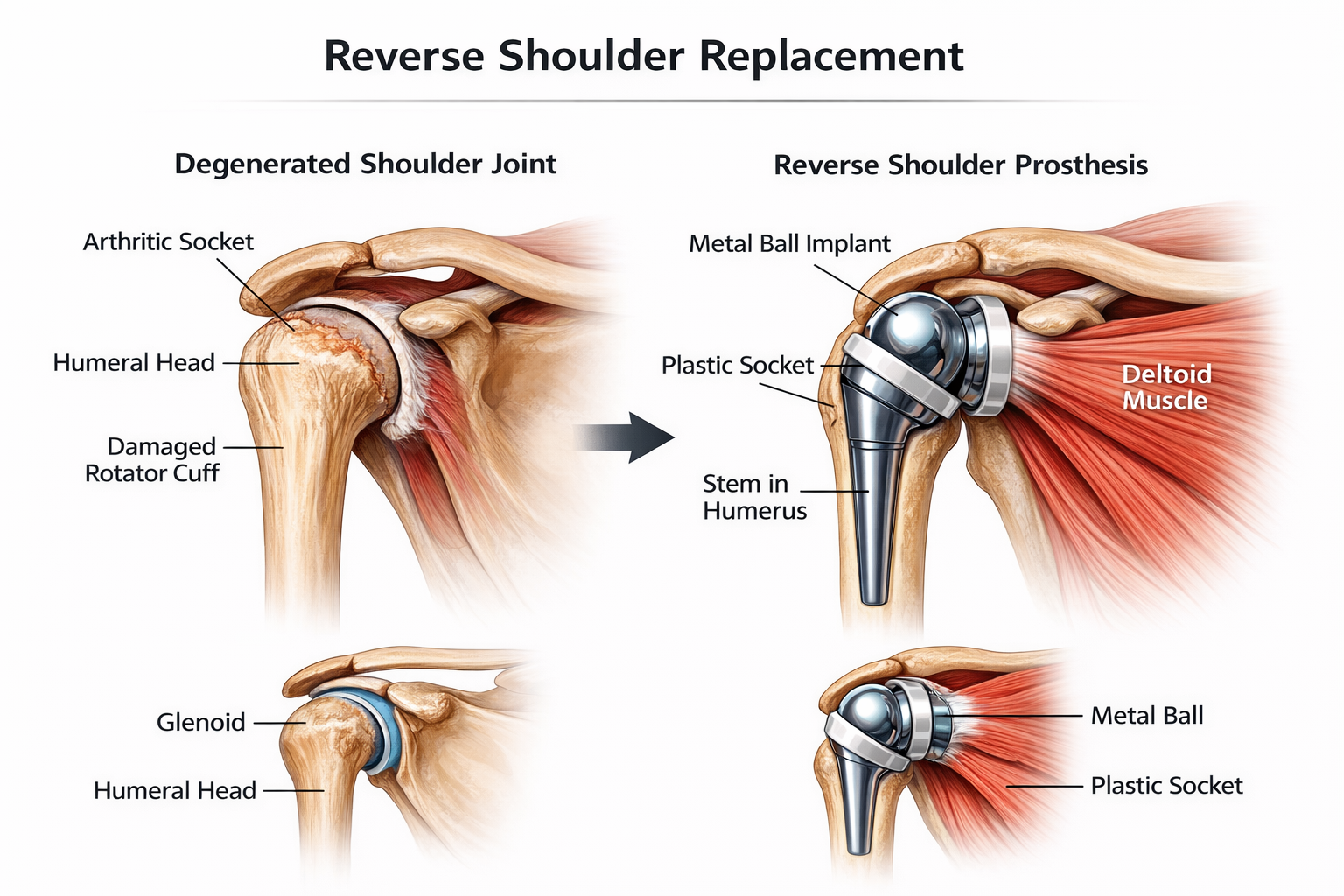
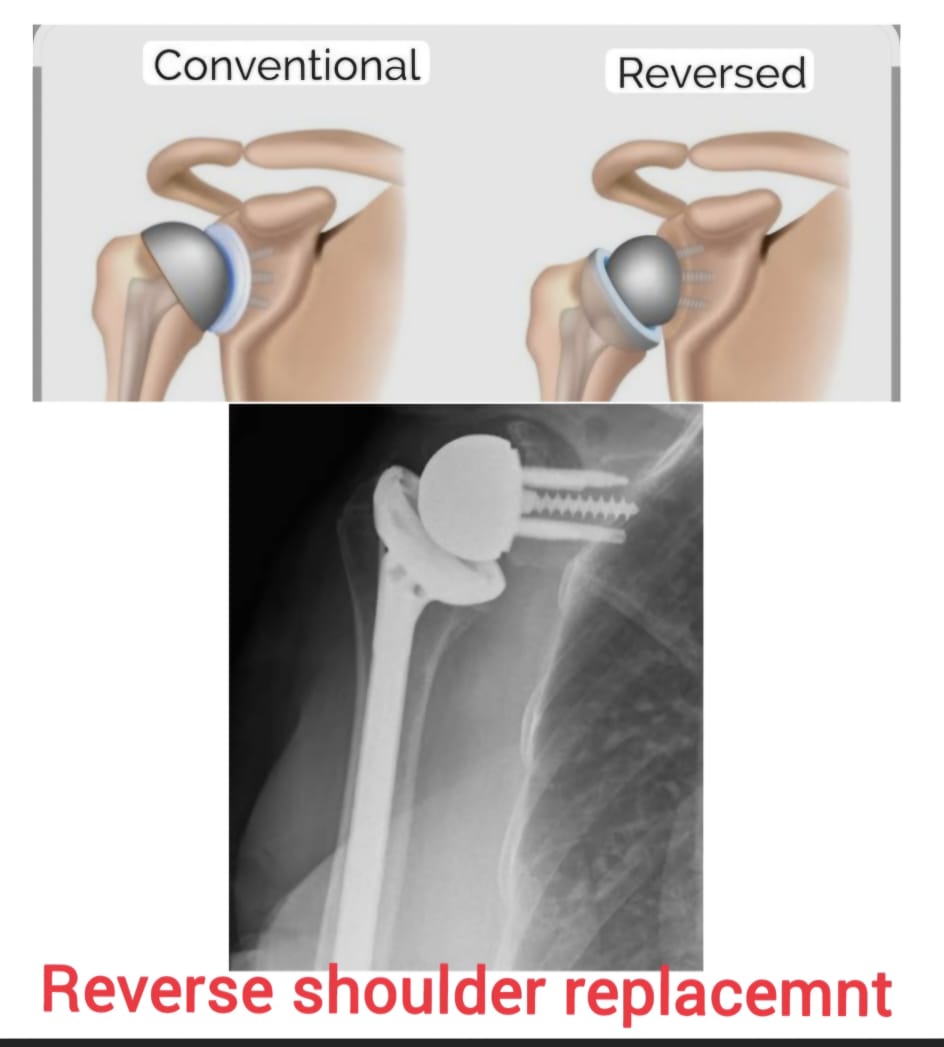
Reverse shoulder replacement is an advanced surgical procedure designed to relieve pain and restore shoulder function in patients with severe rotator cuff damage and complex shoulder conditions. In this procedure, the normal anatomy of the shoulder joint is reversed — the ball component is placed on the socket side, and the socket is placed on the upper arm bone. This design allows the deltoid muscle to take over the function of the damaged rotator cuff.
This procedure is particularly beneficial for patients with rotator cuff tear arthropathy, failed previous shoulder surgeries, or severe fractures. Modern implant designs and surgical precision ensure improved joint stability, better range of motion, and long-lasting outcomes with reduced pain and enhanced shoulder strength.
When to Consider Reverse Shoulder Replacement
- Severe shoulder pain with large or irreparable rotator cuff tears
- Rotator cuff tear arthropathy (arthritis with tendon damage)
- Failed previous shoulder replacement or surgery
- Complex shoulder fractures or instability affecting function
Advantages of Reverse Shoulder Replacement
- Effective pain relief even in complex shoulder conditions
- Improved ability to lift the arm using the deltoid muscle
- Enhanced shoulder stability and joint function
- Reliable outcomes for patients with rotator cuff deficiencies
Rehabilitation after reverse shoulder replacement is crucial for optimal recovery. A structured physiotherapy program helps strengthen the deltoid muscle, improve range of motion, and restore functional independence. Regular follow-ups ensure proper implant performance, joint stability, and long-term pain relief.

Testimonials

Recovery You Can Feel. Results You Can Trust.

Santhosh Sasidharan

My first operation ever (hopefully the last). The experience in the Operation Theatre was mind blowing. DK sir, all docs, and supporting staff were extremely cool right from the time I got into the Operation Theatre. I had to get my Ankle operated (2 fractures). I felt I was in safe hands throughout.

meghana ved
We have known Dr.Harsha for 2 years now. Had consulted him for my mother in law arthritis treatment. Recently visited him for my mother in law’s arm fracture. He provided us with the best course of treatment considering all the other health factors. Always seen him as a very humble person, provides knowledgable care and takes time to address all our doubts and fears. Good doctors like Dr.Harsha replace the fear of illness with trust in recovery. I highly recommend him for anyone looking for a good orthopaedic advice and treatment. I am really grateful for your exceptional care and dedication to patient well being.
Shreya Bharadwaj
I met with an accident in July, 2023,resulting in severe fracture of my left elbow joint.I got admitted to RV Aster hospital. Surgery was performed under the care of Dr. Harsha and his dedicated team. The surgery was successful and I am delighted to share that I have fully regained the functionality of my hand, restoring it to its original state. I am exceptionally pleased with the exceptional treatment I received.